Disclosure: this post contains links to a product we may earn a commission on, at no extra cost to you. It is for information only and is not medical advice.
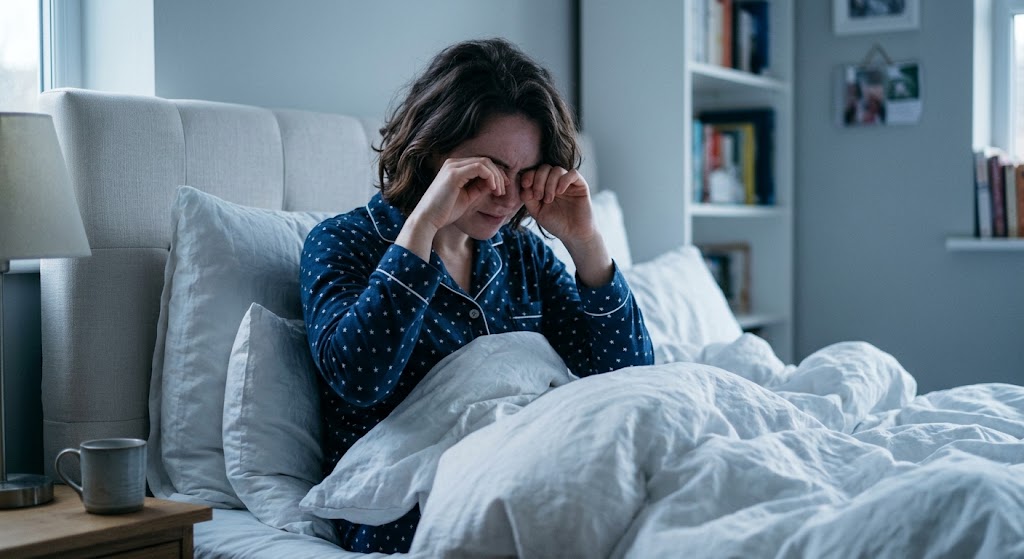
You went to bed on time, stayed in bed for eight hours, and still woke up exhausted. It is a common and frustrating experience. The number of hours is only part of the story. Here are the most common reasons, and when it is worth talking to a doctor.
Hours in bed are not the same as quality sleep
You can spend eight hours in bed and still wake up tired if your sleep is repeatedly interrupted, even in ways you don’t remember. Sleep quality depends on how smoothly you move through the stages of the night, not only on how long you were lying down.
Common reasons you may wake up tired
- Sleep inertia. Grogginess right after waking is a normal part of the process, because the brain wakes up gradually. It can last from a few minutes to over an hour, and it tends to be worse if you are woken abruptly or didn’t sleep enough.
- An irregular schedule. Going to bed and waking up at very different times can leave your body clock out of step.
- Alcohol in the evening. It can make you fall asleep faster, but it tends to cause more awakenings later and lighter sleep.
- Caffeine late in the day. It can stay in your system for many hours.
- Stress and a racing mind, which can keep sleep shallow.
- Your bedroom. Noise, light, heat, or an uncomfortable mattress or pillow.
- Medications that cause drowsiness as a side effect. Ask your doctor or pharmacist if you suspect this.
When it may be something else
If you still feel tired after improving your habits, a medical cause may be involved.
- Sleep apnea. Breathing pauses during sleep briefly wake the brain, often without you noticing. Possible signs include loud snoring, gasping, a dry mouth in the morning, morning headaches and feeling tired after a long sleep.
- Other conditions, such as anemia, thyroid problems or depression, can also cause persistent tiredness.
If you snore loudly, gasp for air at night, or feel exhausted most days, please see a doctor. Treatment for these conditions is medical, and a supplement will not replace it.
Habits that may help
- Keep a steady schedule, including on weekends.
- Get daylight early. Morning light helps anchor your body clock.
- Avoid alcohol close to bedtime and set a caffeine cutoff in the early afternoon.
- Keep the bedroom cool, dark and quiet.
- Give yourself a gentle start. Open the curtains and avoid jumping straight into demanding tasks.
For more ideas, read our guide on how to stay asleep through the night naturally.
Where Yu Sleep fits
Yu Sleep is a liquid sleep supplement. It is not a treatment for sleep apnea or for any medical cause of tiredness. If you are looking at sleep supplements in general, here are some honest points to keep in mind:
- The label doesn’t say how much of each ingredient is in the blend, so it is hard to know the amounts.
- Supplements are not evaluated by the FDA to treat any condition, and results vary from person to person.
- 5-HTP can interact with some medications, including antidepressants. Check with a doctor or pharmacist first, especially if you’re pregnant, nursing, or taking prescriptions.
- A supplement works best alongside the habits above, not instead of them.
Curious about natural options? See whether tart cherry for sleep actually works.
The official page opens with a video presentation. The claims on that page are the manufacturer’s, not ours, and some of them concern weight, which we have not verified. Supplements are not evaluated by the FDA to treat any condition.
Want to understand why you may wake up at the same time each night? Read why you may wake up at 3 AM every night.